
Paper Money Market: Federal Reserve Board Releases 2025 Figures
From printing costs to projected lifespans, fresh Federal Reserve figures offer insight into the true economics behind America’s paper currency.
One of the functions of the Federal Reserve Board (FRB) is to project how many bank notes will be needed in the coming year, then place an order for those notes with the Bureau of Engraving and Printing (BEP). The BEP, in turn, will send the bill for printing these notes to the FRB.
On November 13, 2025, the FRB reported that the 2025 currency operating budget was $1,040 million. This included a $283.4 million reimbursement fee for any unforeseen direct overhead, ink, labor, or paper cost variables. The budget includes an additional $688.6 million to cover fixed printing costs, including general and administrative overhead, research and development, indirect manufacturing overhead, and pre-press and engraving operations.
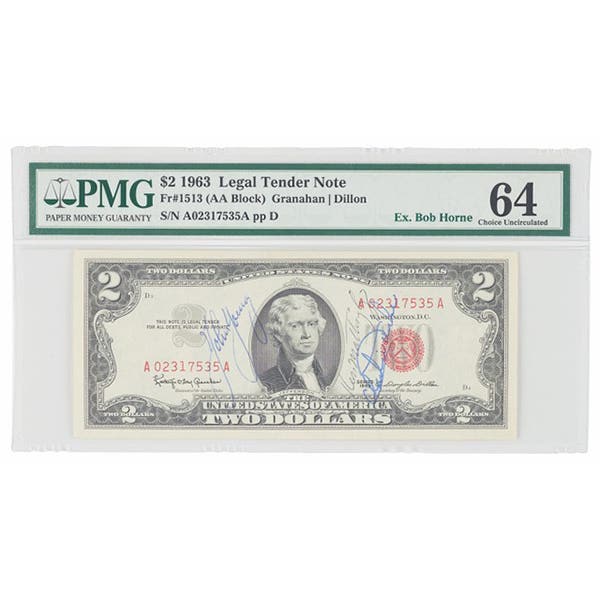
Unlike the now-defunct cent and the likely soon-to-be-defunct 5¢ coin, it currently costs 4.1¢ to print either a $1 or a $2 bank note, according to the FRB. No explanation was given, but it costs 7.1¢ to print a $5 note, while it costs only 6.8¢ to print a $10 note. The cost then rises to 7.3¢ to print a $20 note and 11.3¢ for a $100 note. Since there were no plans to print $50 during 2025, no cost figure was presented.
The FRB projects that a $1 note will circulate for 7.2 years, a $5 note for 5.8 years, and a $10 note for 5.7 years. If it is to be believed, a $100 note will still be circulating after 24 years. A $20 bill is supposed to survive 11.1 years, and a $50 bill for 14.9 years. Interestingly, the supposedly more durable British polymer £5 and £10 notes are projected to last only 5 years, while Canada has projected its $5 notes to last 8 years.
You may also like: