CoinClinic: Defining Odd and Curious Money
Answers to reader questions exploring odd and curious money, bullion coinage, and the history behind modern and ancient monetary oddities.
Does the United States Mint use gold from Fort Knox to mint bullion coins, or do they buy it elsewhere?
The Gold Bullion Coin Act of 1985 requires the Secretary of the Treasury to purchase and use gold bullion in the minting of Gold American Eagle coins that originates and is mined from natural deposits in either the United States or from within a U.S. territory or possession. The gold must have been purchased within one year after the month in which it was mined.
Why was the current gold bullion coin program named the American Gold Eagle?
The Gold American Eagle coinage was authorized by the Gold Bullion Coin Act of 1985. The term eagle was used as the name for the various circulation strike gold coin denominations issued through 1933. The problem was that this included the $10 Eagle. For that reason, the current Eagle coinage will include its metal composition and weight to avoid confusion with the earlier $10 Eagle gold coin.
How should I define odd and curious money for collecting purposes?
Odd and curious money and primitive money are the same thing, within reason. Almost anything that has been used as barter falls into the odd and curious money category, while primitive money is the form of money used by societies that have yet to adopt coined money. Odd and curious money can include such things as tobacco or cigarettes, tokens, Swedish plate money, and anything that may make sense to use as barter when coined money isn’t available. Primitive money includes such things as the Katanga cross, tiger tongues (cast metal bars, not the animal’s tongue), various bracelets, shells, and animal pelts—things used for trade within primitive societies.
Have odd and curious money objects been counterfeited?
Due to the simplicity of many odd and curious items, it isn’t difficult to counterfeit many of them. Manilas, the bronze or copper bracelets that were traded as money in primitive Africa were also produced in England for use in the slave trade. Germans made porcelain wild dog teeth to be bartered with as a substitute for the real thing traded by the Mafula. Wampum was made both by American natives and by the settlers who traded with them.
Are there modern coins that don’t carry a date or denomination?
Modern coins have dates and denominations on them. This wasn’t always so. Christian-dated coins first appeared during the 13th century but did not proliferate until the 17th century. At one time, the face value of a coin would be recognized. It wasn’t necessary to place a denomination on them for that reason. Today, it is expected that coins will have dates and denominations. Any numismatic object on which a denomination doesn’t appear is treated as a medallion rather than as a coin. The American Arts gold medallion series was never popular because the series is called medallions, and they have no denomination. Each coin in the American Eagle bullion coin program has a nominal denomination. This series was a success from which it first began.
When and where was the first ringed bimetal coin issued?
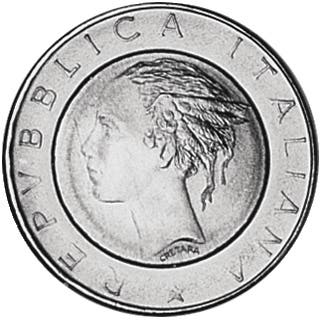
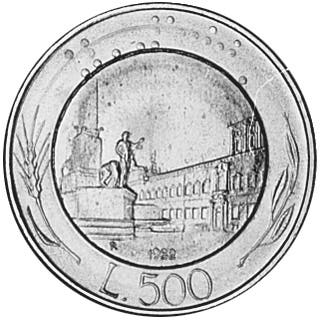
Bimetal coins and medals where there is an inner plug comprised of a different metal than the outer ring have been made on occasion since the time of Roman Emperor Hadrian, who ruled between 117 and 138. There are late 17th-century English farthings that have a copper plug and tin rim. In modern history, you can credit the Istituto Poligrafico e Zecca dello Stato (Italian State Mint) for introducing the ringed bimetal coin as we now know it in 1982.
E-mail inquiries only. Do not send letters in the mail. Send to Giedroyc@Bright.net. Because of space limitations, we are unable to publish all questions.
You may also like: