Making the Grade: What is Micro-Grading
A closer look at the meaning of “micro-grading,” why it isn’t about magnification, and how evolving standards have reshaped the balance between technical flaws and market acceptability.
grading it 69 would be considered Micro-Grading.
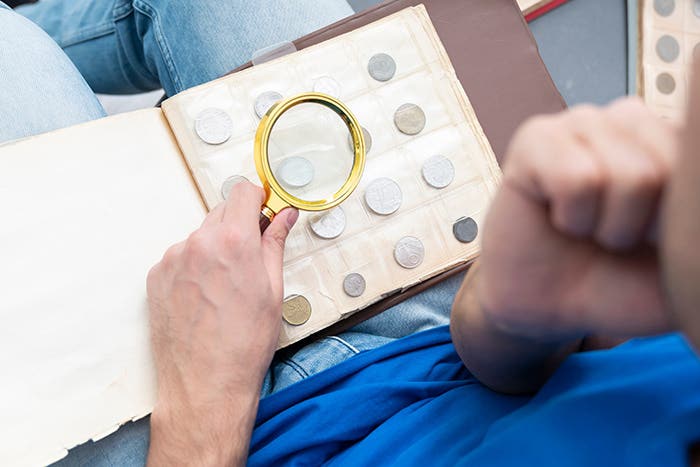
What kind of grader are you? First, I need to add a disclaimer. What follows is solely my opinion, and I’d like to know what you think. Recently, in a popular coin forum, a member asked for a definition of “Micro-Grading.” One of the misconceptions voiced was that it had to do with the amount of magnification used to grade the coin or the degree of wear within each grade (VF-20,25, 30, or 35). Since I consider myself to be a micro-grader due to the number of times I’ve been called out and criticized for it in the past, my reply rolled right off my fingertips: My definition of micro-grading is pointing out any defect on a coin that a long-time professional grader (such as a major third-party grading service finalizer) believes should be ignored. Micro-grading has nothing to do with the amount of magnification used, although any examiner will generally see more on a coin when using magnification. Unfortunately, any power above 10X is considered to be excessive. In fact, the young graders at the grading services who mostly start out naturally as micro-graders are discouraged from using any magnification when grading modern coins. The natural act of noticing things and being too critical is a trait they must learn to control in order to be successful, due to the very short time they can spend on each coin. Additionally, they learn that many tiny imperfections are not so obvious to most collectors when the coin is inside a slab.
Present-day grading has evolved to the point that most emphasis is placed on the overall appearance of the coin rather than its minor defects. Blazing luster, highly reflective “mirrors,” and beautiful toning usually override any of the technical issues on a coin that would have been essential to consider decades earlier. The simple fact is that the “standards” for grading written long ago usually don’t apply to many coins, especially modern ones graded a “perfect” 70. Many professionals consider using the word “perfect” by Sheldon to describe that grade to be unfortunate and misleading, as they don’t believe a perfect coin exists. Nevertheless, I can truthfully testify that there are plenty of perfect 70 coins in slabs.
A micro-grader tends to be conservative – especially when it involves the tiny amount of rub on a coin’s high points. There is nothing wrong with that because, as a buyer, you’ll want your money to pay for value. Additionally, I’ll guarantee that when it comes time to sell, the buyer will be micro-grading your coin while looking for any imperfections. That is why I teach my students to be able to see everything there is to see on a coin. If you think about it, that is EXACTLY what a micro-grader does. Then, they must learn to ignore some of what they see to arrive at a market-acceptable and suitable grade for this day and age. That explains so much of the subjectivity that goes into placing a value on a coin, which all professional grading claims to attempt. Each grader must learn what to ignore in order to follow the “line” required by their employer that may differ from their personal tastes.
Micro-grading can occur in any grade range. It might take place when too much emphasis is placed on a defect found on a well-worn Barber dime, where there is little difference in value between the lower grades. It can also occur if a grader spends too much time examining larger modern coins and bullion as if they were something rare. It might surprise you to learn that professional graders and dealers rarely miss something on a coin, but they understand what affects its value and grade it accordingly. For example, since the presence of spots is no longer covered by a grading guarantee, and no one can be sure when the spot developed, much of the time, the tiny ones that are distracting to a micro-grader may be ignored.
Long ago, at the first Third Party Grading Service, our opinion of a coin’s grade was given at no charge for the asking until several months later, when the ANA started to offer grading along with authentication. We considered ourselves to be protectors of the public and noted any imperfection we found on a coin, no matter how old or how valuable it was. Therefore, the birth of micro-grading occurred at INSAB when we did things like pointing out a barely noticeable, toned-over scratch on a circulated Eighteenth Century coin or noting a bit of discoloration on the high points of a gem coin caused by very slight friction. We believed that our customer should be made aware of any imperfections they might miss. We did not hide imperfections behind a net grade. Defects just lowered a circulated coin’s value and not its grade. How stupid is it to assign a VF grade to a coin with XF detail because it has a bad rim and may not have the value of a nice, straight-graded XF specimen!