The Evolution of MintingTechnology–Part 3
Coinage of the 17th and 18th centuries continued the modernization of minting technology. Until the 1500s, coins were made by hand, struck with hammers. As the world and economies began…
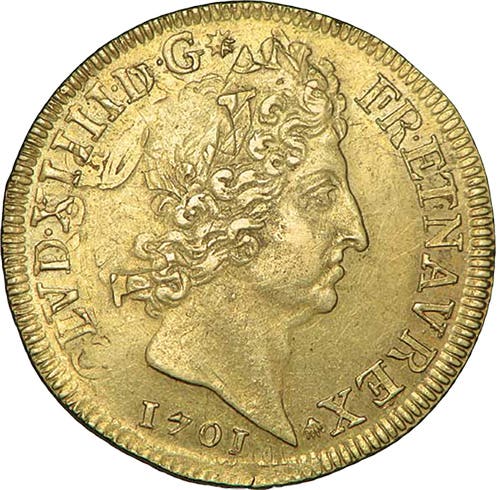
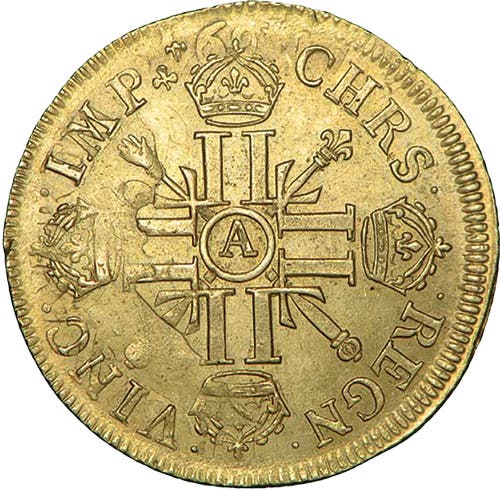
Courtesy Wikimedia Commons.
Coinage of the 17th and 18th centuries continued the modernization of minting technology. Until the 1500s, coins were made by hand, struck with hammers. As the world and economies began to expand, the hammered coinage couldn’t keep up. These hammered coins were often irregular in shape and weight, making them susceptible to counterfeiting and clipping.
To combat these issues, mechanization began to reshape the mints. Innovations such as the screw press, rolling mill, and edge-marking devices were introduced, creating a new level of uniformity and sophistication in coin production.
The introduction of the screw press in the mid-1500s didn’t catch on until the 1600s due to concerns around labor. The new technology allowed for a more streamlined process that used less human labor, a concept that is rarely popular with the people who worked the job before. Still, the screw press eventually caught on and slowly became a standard for coinage in Europe.
The screw press produced several notable improvements, including sharper and more consistent designs thanks to the uniform strike pressure. It also reduced off-center strikes.
The rolling mill created uniform sheets of metal from which planchets would be produced. Metal bars would pass between hardened rollers, reducing them to flat strips. This created a consistent weight and thickness to the planchets and allowed for larger quantities of metal to be processed quickly.
In the late 1600s, Jean Castaing invented a machine that could apply edge lettering to coins. The machine, named after its inventor, was adopted in French mints with the support of King Louis XIV. The machine marked the edges of coins when they were forced between two steel rulers, imprinting legends or designs on the edge. With clipping being a common problem with many coins in circulation, the added decoration made it that much harder to get away with.
Sir Isaac Newton, a name typically associated with physics due to his ideas on the laws of motion and gravity, is actually an important figure for numismatics during this transition time. In 1696, Newton moved to London and took up the post of Warden of the Mint.
At the time, the Royal Mint was still located in the Tower of London. It was a busy time for the mint, as they were in the middle of the “Great Recoinage.” The government had decided to melt and reissue all silver coins, plates, and bullion following the old Elizabethan standard.
Mint staff was using screw presses, which allowed for intricate stamps and milled edges, making them uniform and hard to counterfeit. Still, there were technical difficulties, as well as internal politics that slowed the process down. As Warden, Newton was tasked with improving efficiency and security.
Newton was infamous for his ability to detect counterfeit coins and his pursuit of their creators. To help reduce counterfeiting, he encouraged engravers to take on private work outside of the mint, allowing them to improve their skills and create higher-quality work, making them harder to replicate.
Later, Newton tackled the issues with the quality of the coins’ precious metal content. In a famous Trial of the Pyx, a procedure used to verify the precious metal content of coins produced by the Royal Mint for hundreds of years, Newton’s gold coins were found to be below the required standard. As it turned out, the trial plate was incorrect, but Newton had improved and standardized the assay process, helping to restore the people’s faith in the Mint and its coinage.
Courtesy The Royal Mint.
Despite all he did, Newton did not bring about any new technology; he simply worked at improving what was already there. His desire for accuracy brought about a revolution in coinage standards.
Between the added security provided by the Castaing machine and later improvements to the edge lettering technology, and Isaac Newton’s keen attention to detail, bringing about reform with a coin’s precious metal content, the standardization of coinage was quickly improving.
You may also like: