Will Falling Numismatic Premiums Ever Reverse?
Shifting demand, metal prices, and changing collector tastes continually reshape coin values. Today’s unusually low premiums may signal opportunity for collectors who understand rarity.
Prices for numismatic coins rise and fall from a variety of influences. Among factors that impact prices are the value of any precious metal content, the rise and fall of general prosperity, the publication of new research, changes in information about the actual relative rarity, and changes in the focus.
As prosperity has risen in populous nations such as China and India, rising demand for their earlier coins has soared, driving up prices.
Back in the 1960s, the condition of the cent in U.S. proof sets was the key coin on which collectors focused. Since the 1980s, the half dollar has been the most important coin to evaluate in these sets.
Also in the 1960s, the collecting of uncirculated rolls of U.S. coins reached a peak. A number of Jefferson Nickel rolls of the era reached retail prices of $20, far above today’s levels. Back in the late 1960s, I thought the opportunity to purchase a Mint State roll of 1950-D Nickels for $1,000 represented a terrific value. Fortunately, as I now know, it was good that I wasn’t able to reach the seller in time to snap it up.
With gold, silver, and platinum prices reaching all-time record highs in late January this year, the prices of common-date numismatic coins made of those metals did not appreciate by the same percentages. Similarly, the prices of higher-grade pieces tended to lag in appreciation compared to lesser quality specimens. Did you ever think it would be possible to acquire a Gem Mint State-65 1904 $20.00 for only about 10 percent more than you would pay for a Mint State-60 example?
In past market cycles where gold and silver prices surged, the premiums at which numismatic coins made of those metals fell as their price increases lagged. Many times, it took as long as six months for the collector coins to regain some or all of their numismatic premium.
Will today’s much lower premiums for scarcer date Morgan and Peace Dollars or Pre-1934 U.S. Gold Coins ever reverse?
I think many of them will, though not necessarily to the premium levels of the past. A Mint State-60 $10.00 Indian that sold for 400 percent of gold value 35 years ago, when the gold spot price was in the $300s, is unlikely to sell today for close to $10,000 to represent the comparable premium level.
However, I fully expect that common-date numismatic gold and silver coins will regain somewhat higher collector premiums, though that may not happen until after spot prices stabilize. Further, I also expect that the “little bit scarcer” to genuinely rare issues to regain some of their premiums above the prices of the common dates.
However, there must be some genuine rarity factor that would interest collectors in owning such coins. Here’s one example. The Professional Coin Grading Service (PCGS) and Numismatic Guaranty Company (NGC) have certified 128 specimens of the 1879 $5.00 Liberty in Choice Mint State-63 and all higher grades. That compares to 19,202 pieces graded MS-63 or higher of the 1900 date. That makes the 1900 date 150 times more common than the 1879 date in MS-63 and higher condition. Yet the February 2026 issue of Greysheet lists the MS-63 bid for the 1879 date only 9 percent higher than the 1900 date in the same grade. In the Spring 2026 Red Book Quarterly, the 1879 catalogs in this grade were only 10 percent more than those in 1900. The current PCGS Retail only lists the 1879 in MS-63 at 37 percent higher than the 1900 date. Yet, in the 2023 edition of the Redbook, the MS-63 1879 was cataloged for a 73 percent premium to the 1900. In my mind, I would expect the 1879 to easily trade for 50-100 percent more than the 1900 in MS-63 quality, no matter what might be the price of the common date.
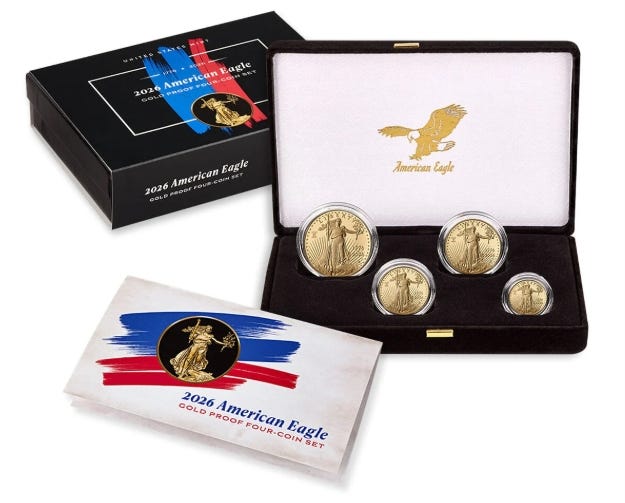
There are many US and world issues produced over the past several decades that were promoted as what I call “Instant Rarities.” In my mind, the Proof versions of the gold, silver, platinum, and palladium American Eagles are not scarce enough to merit a high numismatic premium. Just this week, a bullion wholesaler offered the company where I work a large quantity of 1 Ounce Proof Gold American Eagles for less than 1 percent above the value of the gold content. I do not expect these coins to regain their often 20-30 percent premiums to gold value, as they often enjoyed in prior years.
Part of the challenge and potential enjoyment of numismatics is to try to comprehend what items represent the best value in today’s market. It isn’t easy.
Last column’s numismatic trivia question.
Last time I asked— In what years did the Denver Mint not put its D mintmark on the coins struck there? Coins struck at the Denver Mint dated 1965, 1966, and 1967 did not bear any mintmarks, a requirement in the Coinage Act of 1965. This was the beginning of circulating dimes, quarters, and half dollars made of copper-nickel instead of an alloy of 90 percent silver and 10 percent copper. This temporary elimination of mintmarks was meant to discourage the collecting or hoarding of coins that supposedly caused the national coin shortage. This was not accurate. Instead, it was the rising price of silver that was responsible for silver coinage disappearing from circulation. Mintmarks returned to U.S. coins in 1968.
This week’s trivia question
Here is this week’s question. The world’s largest coin weighs about 8,800 pounds. Where is it located? Come back next week for the answer.
You may also like: