Price Volatility and Capacity Problems with Precious Metals and Numismatics
Surging silver prices are straining refiners, fabricators, and the U.S. Mint, creating delays, shortages, and new challenges for bullion coin production.
The price of silver rose by more than 142 percent for the year 2025. In the first two weeks of 2026, silver’s price jumped by almost another 30 percent from where it was on December 31, 2025. Over the course of last year, the price of gold soared more than 64 percent, platinum zoomed more than 127 percent, and palladium gained over 74 percent.
The outstanding performance of silver in particular was due to the difficulty of manufacturers being able to find the silver inventories required to fabricate their industrial products. As just one example of rising industrial demand, according to The Silver Institute, the use of silver in photovoltaic products such as solar cells has increased more than 160 percent from 2019 to 2025. Silver is in high demand for products because of its electrical conductivity and antibacterial properties. It is an essential component of a wide range of products, including electric vehicle batteries, cell phones, weapons systems, and sanitary food processing equipment.
For almost all industrial applications, only small quantities of silver are needed for each unit produced. Therefore, there is little price sensitivity for the metal. As one example, it used to cost about one cent per square foot of surface to add silver to paint to make it possible for the surface to destroy any bacteria that landed on the wall or ceiling. If the price of silver were to double, triple, or rise even higher, it would have almost no impact on the retail price of a gallon of paint.
However, quickly rising silver prices are disrupting industries that handle high-purity forms of the metal. That includes products such as ingots and coins.
In the fall of 2025, higher silver prices had prompted people to liquidate such a large quantity of silver items that multiple refiners started to build up backlogs of metal to process. Facing a backlog of industrial demand for commercially pure silver, several refiners for a time stopped accepting any silver items that were not already at least .999 purity. Items such as sterling silver flatware and jewelry, U.S. 90 percent and 40 percent silver coins, and the 35 percent silver U.S. World War II nickels were either refused by refiners entirely or were accepted for delayed processing. Refineries were operating at capacity, so they had the economic incentive to focus on processing only the purest forms of incoming metal to maximize their output.
Although almost all refiners are now accepting lower purity forms of silver to process, there may be a lag in turnaround time of at least a couple of days to maybe two weeks to obtain an assay of metal submitted for melting and refining.
The existing fabricators of silver coins and ingots only have so much capacity available to manufacture new products. In late December, public sentiment shifted toward wanting to purchase rather than liquidate bullion-priced silver. Dealer inventories have dwindled, as have the inventories held by bullion wholesalers. Delivery delays of up to two weeks are starting to develop with some ingots and coins.
Perhaps the most dramatic supply delay has occurred with 2026 U.S. Silver Eagle Dollars. Normally, the U.S. Mint accepts its first orders of new year’s Silver Eagles on the first Monday of the calendar year, with retailers often receiving their first shipments by January 10-15. This year, the Mint does not expect to start shipping these coins until at least early February.
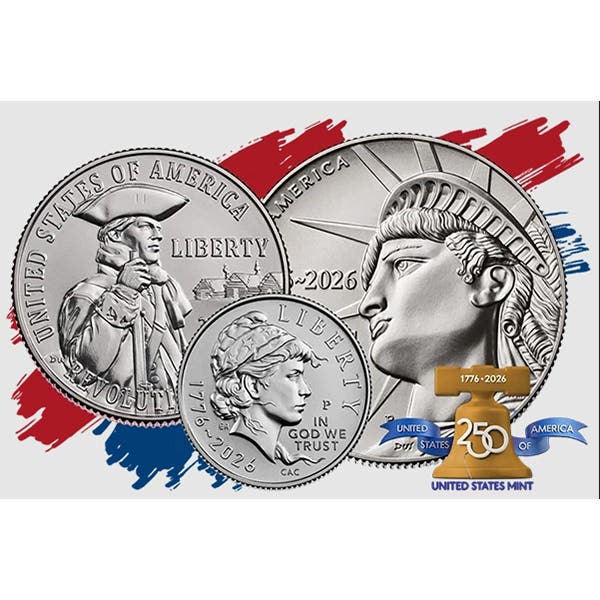
The U.S. Mint also offers on its website a variety of silver coins and medals at bullion-related prices. With sharply rising silver prices, the Mint has removed all of those products from being offered for sale. If you go to the Mint’s website, you will now see a “Remind Me” button to click to receive a notification when the Mint is again putting these items back on sale. Although the Mint’s language implies that these coins and medals are “out of stock,” the real problem is trying to set a price that customers will be willing to pay while also leaving enough margin in the price to cover material, labor, and overhead costs and leave some room for a profit.
As the shortages of silver needed for industrial fabrication continue, look for more upward pressure on prices and continuing problems with the capacity of the refining and manufacturing industries to produce sufficient product to meet demand.
Last column’s numismatic trivia question.
Last time I asked— What U.S. coin denomination has been struck for circulation in the greatest number of years? The cent was struck for circulation every year from 1793 through 2025, except 1815. No other denomination comes close to the 232 years of production. For example, five-cent coins for circulation were struck during 202 years from 1792 to 2025.
This week’s trivia question
Here is this week’s question. Which state, when it was an independent nation, had scrip issued by its own naval department? Come back next week for the answer.
Patrick A. Heller was honored as a 2019 FUN Numismatic Ambassador. He is also the recipient of the American Numismatic Association 2018 Glenn Smedley Memorial Service Award, the 2017 Exemplary Service Award, the 2012 Harry Forman National Dealer of the Year Award, and the 2008 Presidential Award. Over the years, he has also been honored by the Numismatic Literary Guild, Professional Numismatists Guild, National Coin & Bullion Association, and the Michigan State Numismatic Society. He is the communications officer of Liberty Coin Service in Lansing, Michigan, and writes “Liberty’s Outlook,” a monthly newsletter on rare coins and precious metals subjects. He now volunteers with the National Coin & Bullion Association as its Industry Issues Advisor. Past newsletter issues can be viewed at www.libertycoinservice.com. Some of his radio commentaries, "Things You ‘Know’ That Just Aren’t So,” and “Important News You Need To Know,” can be heard at 8:45 a.m. Wednesday and Friday mornings on 1320-AM WILS in Lansing (which streams live and becomes part of the audio archives posted at www.1320wils.com).
You may also like: