


Physical Cash is Still Needed
Despite the rise of digital payments, global data shows cash remains a critical safeguard during economic uncertainty, political shifts, and system disruptions.
It appears the so-called cashless society concept is only a fair-weather friend. This can be attested by the Central Bank of Russia and others. According to recently released data from the Bank of Russia, the volume of cash in circulation is 4.8 times higher than it was at the same time last year.
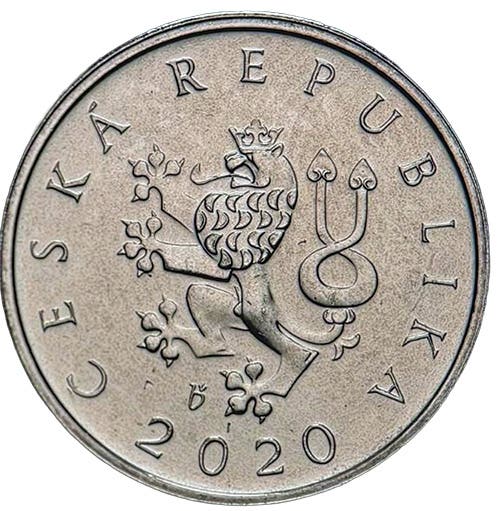
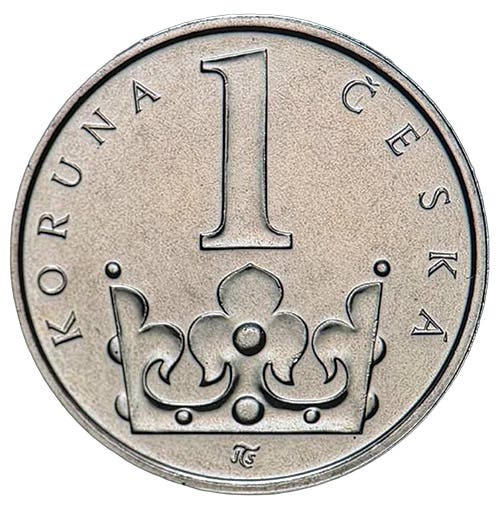
In a January 6, 2026, speech, the Czech Republic’s new leader, Andrej Babis, said, “We will propose to parliament that the Czech crown be anchored in the constitution of the Czech Republic—along with the right to hold and use cash as legal tender.”
According to a late 2025 European Central Bank bulletin, “the value of outstanding bank notes has consistently maintained a share of over 10% of euro area GDP [Gross Domestic Product] over the last ten years, with a temporary increase during the COVID-19 pandemic years and a moderation since the second half of 2022 due to higher interest rates.”
In early 2026, a Siena Research Institute and Payment Choice Coalition survey found that more than 85% of respondents supported laws requiring businesses to accept physical cash, with 84% opposing a society that is entirely cashless, regardless of their personal practices.
This survey follows findings in the U.S. Federal Reserve Bank’s 2025 Diary of Consumer Payment Choice. According to the Fed study, 92% of respondents said they have no plans to stop using physical cash, despite improvements in digital payments and FinTech capabilities.
The Czech Republic’s recently elected government is right-wing and populist. Far-right political parties across Europe distrust the state and all its institutions. They frame cash as being protection against surveillance, control, and arbitrary power. The phrases “digitalization imposed from above” and “digital totalitarianism” are warning signs to people with these beliefs.
The Bank of Russia said technical issues and regulatory changes are key drivers of the expansion of cash use. ATM deposits have increased by 7.3%, while withdrawals have increased by 5.9% recently. Tighter banking controls and new powers granted to the Federal Tax Service have heightened public caution regarding financial transparency. Cash is private. Electronic transfers are not.
Infrastructure outages that disrupt electronic or digital financial transfers are commonplace in Russia. Stricter financial oversight and tax monitoring are driving people to use cash more and cards less. Big Brother may be watching, and Russians don’t like it.
The Bank of Japan is considering a digital yen due to a dramatic increase in cashless transactions. At a 2025 meeting, Bank of Japan Executive Director Kazushige Kamiyama said, “Although bank note issuance remains high in Japan, usage of notes could fall significantly in the future amid rapid digitalization.” Note that Kamiyama used the word “could.”
Other central banks are seeing similar trends. The Reserve Bank of Australia’s latest Triennial Consumer Payments Survey found that the share of cash payments fell from around 70% in 2007 to 13% in 2022. The bank previously observed, “Much of the strong demand for bank notes can be attributed to people’s desire to hold cash for precautionary or store-of-wealth purposes. This behavior is common during periods of significant economic uncertainty and stress, and many other countries saw similar patterns of cash demand.”
While there are various reasons why physical cash doesn’t appear to be phased out, one thing stands out in particular, as recognized by the U.S. Federal Reserve Bank. Physical cash is important in the event of a national security threat. Cash is also more reliable during natural disasters.
According to the European Central Bank, “The public’s additional demand for cash is usually moderately positive. However, the onset of sudden crises—such as the 2008 financial turmoil, the 2014–2015 sovereign debt crisis in Greece, the outbreak of the COVID-19 pandemic, or Russia’s unjustified full-scale invasion of Ukraine in 2022—triggered immediate and extreme surges in cash acquisition by the public…These diverse crisis episodes illustrate that the utility of cash intensifies markedly when stability is threatened—irrespective of the specific nature or geographical scope of the underlying shock, or the degree of digitalization.”
As a December 4, 2025, realnoevremya.com posting put it, “The key task for financial institutions and the regulator is to build a balanced payment ecosystem in which different payment formats do not compete but complement one another.”
You may also like: