Should You Hoard Your U.S. Cents?
Now that the U.S. Mint has paused cent production, experts weigh whether hoarding billions of Lincoln cents makes sense—or just cents.
There was a lot of news coverage when the U.S. Mint struck its final cents for circulation in November. One of the most frequently asked questions we have recently heard is whether it is worth saving U.S. cents as an investment.
For most people, the answer is no. Yes, the almost pure copper cents struck up to partway through 1982 have a metal value above three cents right now, and even the copper-plated zinc cents struck since 1982 have a metal value getting close to a cent.
But it is illegal to melt cents and nickels in the U.S. It is also illegal to export more than $100 face value of U.S. cents and nickels, which could then be legally melted in other countries.
There were more than 500 billion U.S. Lincoln Cents struck over the years. The last time I heard the math, the U.S. government calculated that there are more than five hundred cents per person in the country out in circulation.
In other words, Lincoln cents are not and will not be rare.
There is one potential risk that the U.S. government, as a way to gain revenues, could order a surrender of Lincoln cents other than those held for numismatic purposes, similar to the fully compensated gold coin and gold certificate mandatory redemption program in 1933. The purpose of this would be for the U.S. government to then melt these coins as a low-cost source of copper.
You also need to look at what happened in 1967 when the U.S. government announced that it would discontinue redeeming Silver Certificates for the silver that backed them. Massive quantities of Silver Certificates were redeemed before the 1968 deadline. But massive quantities are still in public hands, either because it was too much bother to redeem them, some people didn’t know they could get silver for them, or some people thought they would go up in value because they would suddenly become numismatic rarities.
Those who held onto Silver Certificates as an investment have seen the value of these notes fall much faster in purchasing power since 1968 than they have appreciated in collector value. We expect that the same result will occur with bulk Lincoln cents.
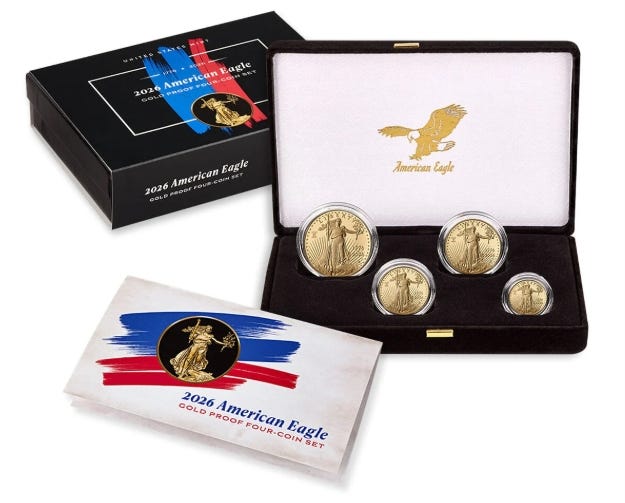
You may keep some for a collection or just as mementos, but you will almost certainly be better off depositing the bulk Lincoln cents into your bank account and then using those funds to purchase bullion-priced physical gold coins and ingots.
Last column’s numismatic trivia question
Last time I asked—Why was the British penny referred to by the symbol “d?” The British penny debuted around 785 A.D. during the reign of King Offa of Mercia. These silver coins were adapted from the silver deniers that circulated widely in Carolingian France and even elsewhere in continental Europe, hence the initial d. The denier itself evolved from the ancient Roman denarius, the common circulating coin from about 212 B.C. up into the Third Century A.D.
This week’s trivia question
Here is this week’s question. Why did Canada begin issuing silver dollars into circulation in 1935, the same year that the U.S. Mint issued the final Peace Dollars for circulation? Come back next week for the answer.
Patrick A. Heller was honored as a 2019 FUN Numismatic Ambassador. He is also the recipient of the American Numismatic Association 2018 Glenn Smedley Memorial Service Award, the 2017 Exemplary Service Award, the 2012 Harry Forman National Dealer of the Year Award, and the 2008 Presidential Award. Over the years, he has also been honored by the Numismatic Literary Guild, Professional Numismatists Guild, National Coin & Bullion Association, and the Michigan State Numismatic Society. He is the communications officer of Liberty Coin Service in Lansing, Michigan, and writes “Liberty’s Outlook,” a monthly newsletter on rare coins and precious metals subjects. He now volunteers with the National Coin & Bullion Association as its Industry Issues Advisor. Past newsletter issues can be viewed at www.libertycoinservice.com. Some of his radio commentaries, "Things You ‘Know’ That Just Aren’t So,” and “Important News You Need To Know,” can be heard at 8:45 a.m. Wednesday and Friday mornings on 1320-AM WILS in Lansing (which streams live and becomes part of the audio archives posted at www.1320wils.com).
You may also like: