Letters to the Editor: January 2026
Readers share perspectives on coin design, numismatic history, macro-economics, and famous collectors.
FOIA Request on New Coins
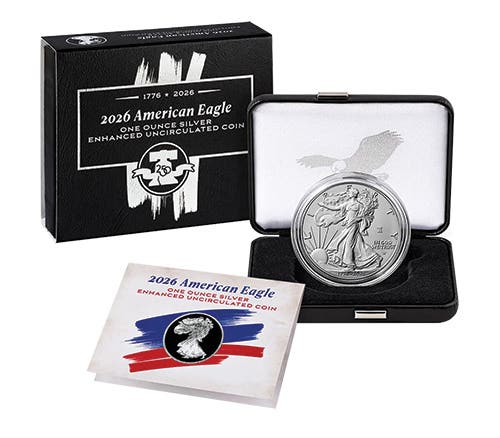
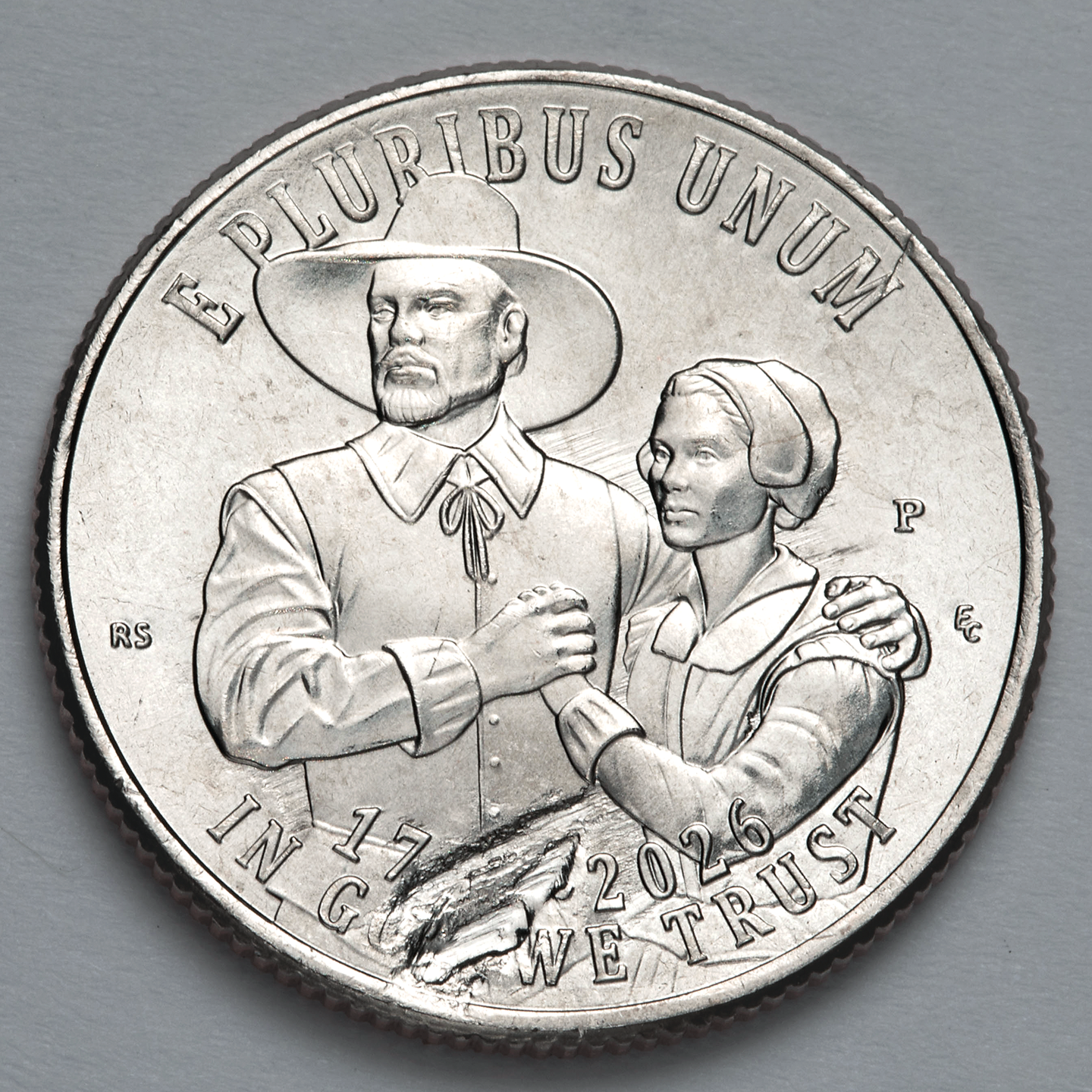
On Dec. 10, 2025, I traveled to Philadelphia to attend the Treasury Department’s unveiling of its planned 2026 Semiquincentennial coins. I’m concerned enough about the irregularities I witnessed, and their potential to damage the government’s reputation, that I’ve made a Freedom of Information Act request to gain insight into how the coins’ themes and designs were developed and selected.
The Circulating Collectible Coin Redesign Act of 2020 required the Secretary of the Treasury to consult with the Commission of Fine Arts on the Semiquincentennial coin designs. Most of the designs unveiled by the Mint were never reviewed by the CFA. Complicating matters, all members of the Commission were fired in October 2025, making the required consultation impossible after that point.
The law also requires that the Citizens Coinage Advisory Committee review the Semiquincentennial coin designs. The Mint worked for several years with the CCAC, the Smithsonian (including the National Numismatic Collection), the Library of Congress, and others to develop themes and potential designs for the coins. In October 2024, the CCAC met in a two-day public session to review the design candidates created from this collaboration. Most of the designs unveiled by the Mint in December 2025 were not in the portfolios reviewed by the CCAC.
Further, the law requires that “designs shall be developed and selected in accordance with the design selection process developed by the Secretary in consultation with the United States Semiquincentennial Commission.” It’s unclear whether the design selection process was followed for the designs unveiled, and/or whether the Semiquincentennial Commission was consulted.
Finally, the law requires that the designs be developed and selected “with recommendations from the general public.” It’s unclear if this legal requirement was met. So far, I’ve heard no reporting that it was.
The Semiquincentennial coinage themes that were developed starting in 2021, and the designs that were ultimately selected by Treasury Secretary Janet Yellen, did meet all the requirements of the law. Most of the themes and designs unveiled by the Mint in December 2025 appear to be an alternate slate, quickly developed and selected without meeting legal requirements.
I served as numismatic specialist on the Citizens Coinage Advisory Committee for two terms, totaling eight years (2016 to 2024). This comprised service under three presidential administrations (Obama, Trump, and Biden), three Treasury Secretaries (Lew, Mnuchin, and Yellen), and two Acting Secretaries between administrations (Baukol and Lebryk). Over the course of those eight years, I don’t recall any of the transitional (Acting) Treasury leadership, nor the leadership of new administrations, revoking or rescinding coinage design decisions made by predecessor leadership. Nor am I aware of any earlier instance, prior to my start of service in 2016.
Right now, the outward appearance is that the Treasury Department has broken its own longstanding standard operating procedures—and, more importantly, that it failed to follow the law mandated by Congress and signed by the President in January 2021. The Treasury deserves an opportunity to openly defend and explain its actions. Similarly, the American public deserves to have confidence in our federal government, to be assured that the law is being followed.
As of late December 2025, the Mint has a 116-day turnaround time for processing simple FOIA requests. I’ve asked that the Treasury Department expedite this request in order to maintain public confidence and to make sure the Semiquincentennial coins enjoy a proper and lawful rollout.
Dennis Tucker, Atlanta, Ga
History in Coins
Mr Brothers,
A note to thank you for your recent article on “Macro-Numismatics.” The connection of coins and coinage with history and geopolitics is one of my main attractions to the hobby. I gravitate to any article in NN dealing with the response of coinage to historic and economic conditions in the U.S. and elsewhere.
For years, I have patronized Joel Anderson, California dealer, because of his emphasis on the historic aspects of coins. For a long time, I printed out his description of the historic significance of individual coins to display with them. Finally, I didn’t have room for those features, plus I realized that most people viewing the coins had no interest in that aspect anyway. (Boring people.)
So thank you, and I look forward to more articles emphasizing this approach.
Jim Burnell, Address withheld
Macro-Numismatics
I enjoyed and appreciated the article on Macro-Numismatics in the July 1 issue of Numismatics News. I agree that we should consider numismatic history in the context of macroeconomic and global factors.
I was also attracted to the specific date of 1921, as it brought back memories of a dispute I had in High School AP U.S. History in ’87. A fellow classmate and I were rivals for a scholarship to be given to the top of the class. The final exam encompassed the entire U.S. history. One multiple-choice question was something to the effect of:
Q: 1920s could be characterized as:
A. A decade of multiple periods of growth and contractions.
B. A decade of continuous growth followed by a single bust.
Based on my memorization of coin mintages from the Redbook and thinking specifically of 1921, I answered A. The teacher was, instead, looking for B, as this is the simplified view of the Roaring 20s. This one point cost me the $300 check and what would have then been three Carson City GSA dollars.
Later, I would take several economic history classes during my undergraduate years. We would study how the deflation following WWI hit the farm belt once Europe could produce its own food again. This agricultural depression took many years to cascade through rural banks before it hit the money center of NYC. The cascade is visible in your table of Farm Foreclosures. Understanding the rolling banking crisis and the government response in 1933 was useful to understand the intricacies of national bank note collecting.
Ryan Baum, Davis, Calif.
Famous Coin Collectors
Don’t forget one of Pittsburgh’s long lists of movie contributors, Adolphe Menjou! Born in 1890 here in Pittsburgh. Sold his collection at a Waldorf auction in 1950.
Menjou:
Adolphe Menjou was an acclaimed, debonair American actor whose wonderful coin collection was sold in 1950 by legendary dealers Abe Kosoff and Abner Kreisberg. It was billed as “the most comprehensive listing of United States coinage ever offered at public auction.” Although unknown to many collectors today, Menjou’s name and coins “rose like thick cream on the top of fresh milk” when the PCGS Ten Most Famous U.S. Coin Rarities list was compiled. “The Menjou catalog contained five of the ten coins on our list, including an 1894-S dime and an ultra-rare 1885 Trade Dollar,” said Guth.
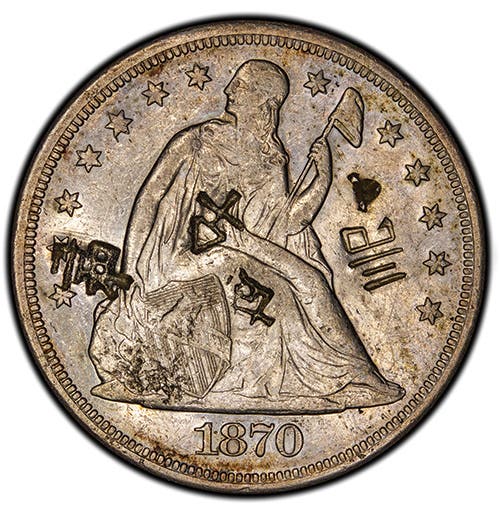
The Menjou coins on the PCGS “Ultra” list are 1894-S Barber dime (PR-60); 1876-CC twenty-cent piece (MS-65); 1838-O half dollar (PR-60); 1870-S Seated Liberty dollar (VF-30); and 1885 Trade Dollar (PR-64).
Name and Address withheld
Celebrity Collection on Display
Thank you for an interesting article by Philip Lo Presti about Famous People who collect coins in your November 25, 2025, edition.
Since Mr. Lo Presti did not mention comedian Lily Tomlin, one should note that part of her ancient gold coin collection was on display at the Getty Villa in Los Angeles when I visited a few years ago. The pieces she owned were labeled with descriptions of the coins, and her name was attributed.
I have not been to the Villa recently, so I do not know whether the coins are still on display. The Getty Villa sustained some damage in the Pacific Palisades fire, but the artwork was saved.
Bruce R Frohman, Modesto, Calif.