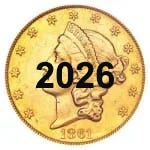

Legislation for New Coin Denomination
A House-backed proposal to study a $2.50 coin spotlights the growing disconnect between inflation and America’s static currency denominations.
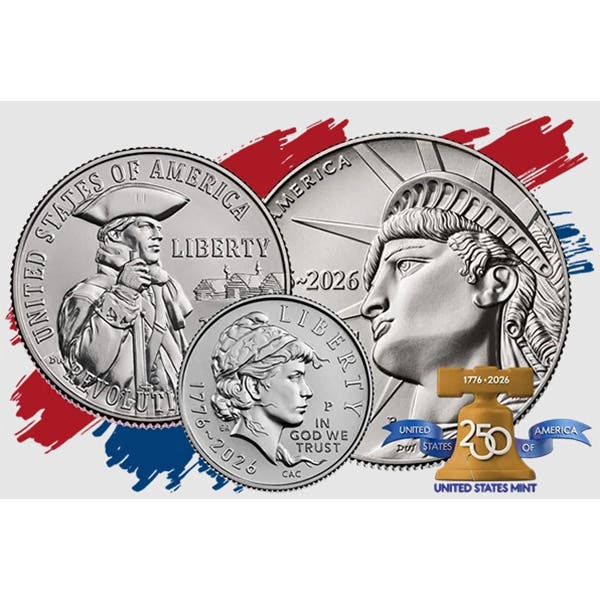
Finally, there is some common sense regarding our circulating coinage. The House of Representatives passed legislation sponsored by Alabama Republican Robert B. Aderholt, marking the U.S. 250th anniversary of independence. The bill includes a proposed study regarding the viability of a circulating $2.50 coin.
Inflation is a fact of life here in the United States just as much as it is everywhere else. We are already playing follow the leader by having ceased production of the cent due not only to the cost of production, but because the cent no longer has any purchasing power. The half cent ceased production in 1857, but despite inflation, it has taken us 169 years to move away from the next denomination at the bottom of our currency system.
Our highest denomination bank note appears to be frozen at $100, despite a $1 note once again barely being practical in commerce. Are we trying to send a message to the world that we aren’t impacted by inflation by failing to adapt to the times, as have most other countries? Canada, as an example, dumped its 1-cent coin long before we did. Likewise, the Canadian dollar bill is no longer in use but has been replaced successfully by a dollar coin. Canada also uses a $2 coin.
It appears to be logical that a circulating U.S. $2.50 coin would make sense. The problem is that although we now have former coin dealer (and coin collector) Paul Hollis as U.S. Mint director, unfortunately, he can’t make those decisions—only Congress can. When Northwest Florida State College can figure out how to make aluminum composition commemorative coins from metal salvaged from the SS United States (in collaboration with Okaloosa County's Natural Resources team), you’d think our federal government could be at least a little more innovative as well.
You may also like: