
The Face of Liberty
The Statue of Liberty is one of America’s most recognizable symbols, but the face behind it remains a subject of debate, shaped by artistic influence, history, and myth.
When immigrants arrived by boat at Ellis Island, they were famously greeted by the beautiful Statue of Liberty. Standing 305 feet tall, wearing a Roman-style gown on her long body and a seven-point crown atop her head, she holds a torch to represent enlightenment and freedom, and a tablet to signify law and the Declaration of Independence, which reads, “July IV MDCCLXXVI” (July 4, 1776).
The Woman Behind the Face
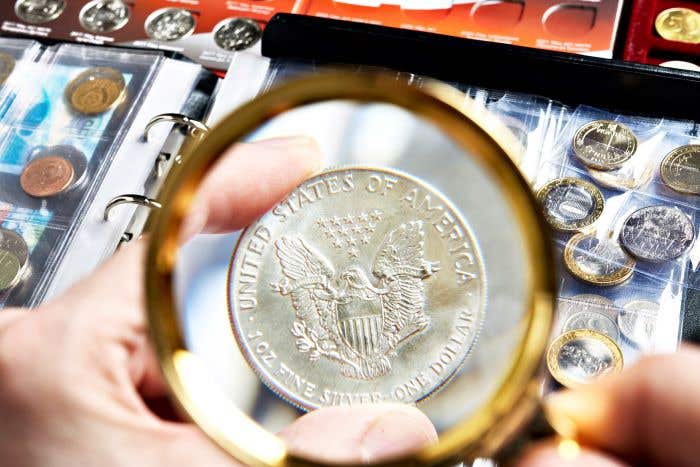
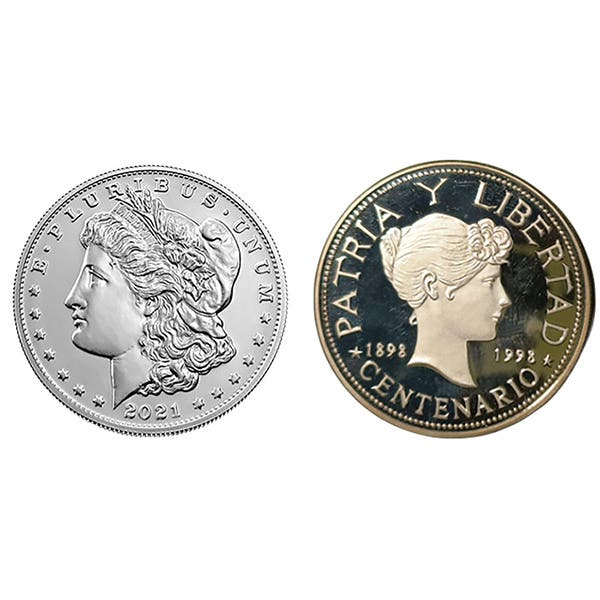
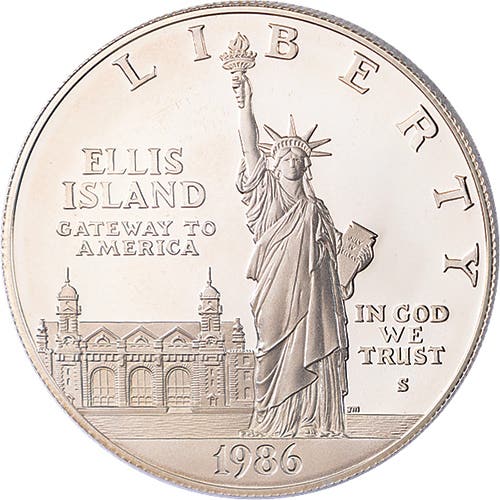
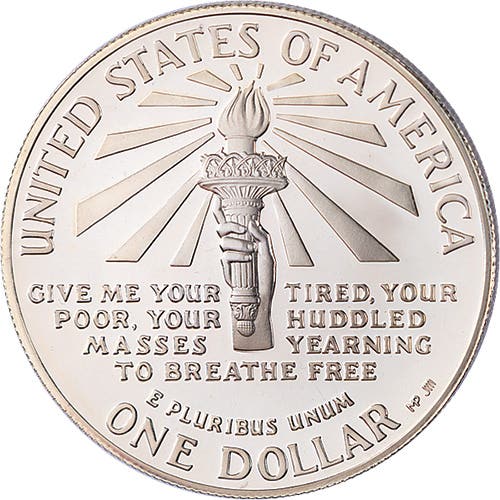
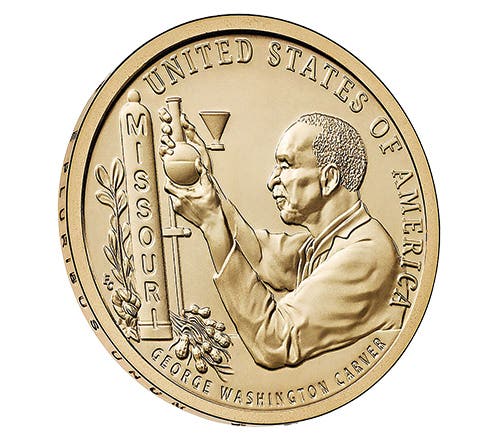
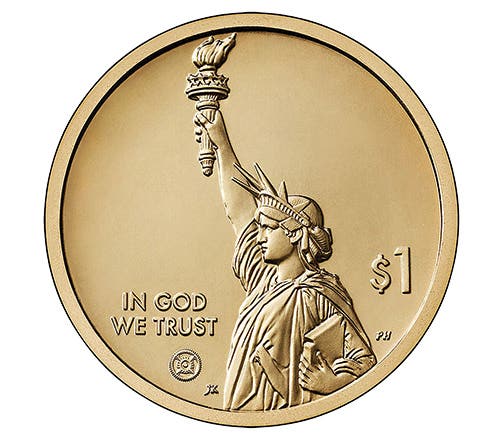
However, Lady Liberty has not only welcomed millions to the shores of the United States, but she also serves as an emblem for the nation’s citizens, a symbol of the pursuit and persistence of freedom. With such a weight of emblematic responsibility, it is natural that this Lady Liberty has also served as an inspiration for many coin designs. She famously graces the designs of pieces like the 1986 Statue of Liberty commemoratives, the 2001 New York State quarter, the 2007–2016 Presidential dollars series, and the American Innovation $1 issues.
Lady Liberty’s likeness is common, easily glossed over. But look closer at this fictional, realized woman and you’ll see a stoic, feminine face—a steely brow, serious eyes, and a tense jaw. She doesn’t welcome with a smile. Instead, her confidence and inner strength are encouraging.
But who was the face that inspired this monumental icon? The answer isn’t set in stone—or, in this case, copper, stainless steel, and iron. The owner of this visage was likely a real woman connected to Lady Liberty’s creator, Frédéric-Auguste Bartholdi.
Many associate the Statue of Liberty with Gustave Eiffel, a French civil engineer famous for building the Eiffel Tower, and being the structure’s namesake. Eiffel was responsible for the metal framework of Lady Liberty, but it was French sculptor and artist Frédéric-Auguste Bartholdi who created the appearance that we recognize.
What we do know is that the inspiration behind the statue is more an amalgamation of design than a single person or object. It is believed that Bartholdi sourced from the Colossus of Rhodes, one of the Seven Wonders of the Ancient World, which depicted the Greek god Helios and may have stood over 100 feet tall. This concept first occurred when he took on what would become a defunct project of a statue for the entrance to the Suez Canal in Port Said. But instead of a masculine, aggressive-looking god, Bartholdi’s version was one of a goddess who, like the original version, would hold a lighted torch for the incoming and outgoing ships.
American coinage may have also influenced Bartholdi’s design. At the time of the statue’s creation and construction in the 1870s and 1880s, the Roman goddess Libertas was commonly featured on American coins, including the famous Liberty Head issues. Robed and female, Libertas was originally worshiped as the goddess of freedom and was popular among slaves. Her presence during the 19th century was frequently used in artistic design as a symbol of the United States.
Courtesy Aido2002/Wikimedia Commons.
Bartholdi’s Women
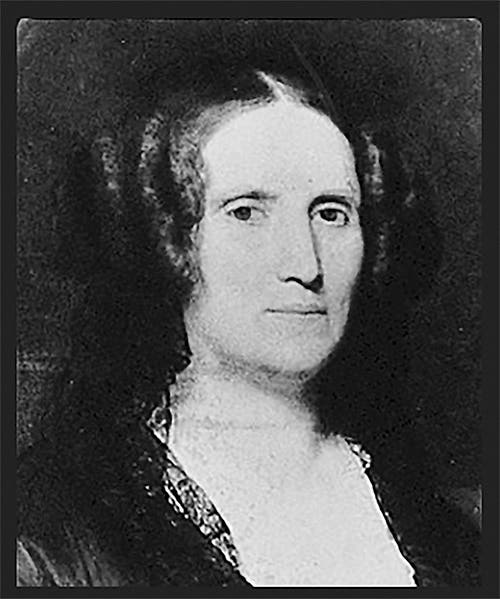
Many historians and researchers believe the Statue of Liberty was modeled on a very familiar face for the artist, his mother, Augusta Charlotte Bartholdi.
Born in 1801 in Ribeauville, France, Augusta Charlotte’s adulthood began when she married property owner and editor Jean Charles Bartholdi and became the mother of four children, of which only two (Frédéric-Auguste and his brother) would survive infancy. Raising her children in Colmar in a Protestant household, her life was impacted by the death of her husband in 1836, when Frédéric-Auguste was only two years old. She then moved the family to Paris to be near relatives, and kept a home in Colmar, which would ultimately become the Bartholdi Museum.
According to Barry Moreno in his book The Statue of Liberty Encyclopedia, when Bartholdi introduced his mother to a French senator, the senator remarked that the Statue of Liberty resembled her. The artist then explained that she served as the inspiration.
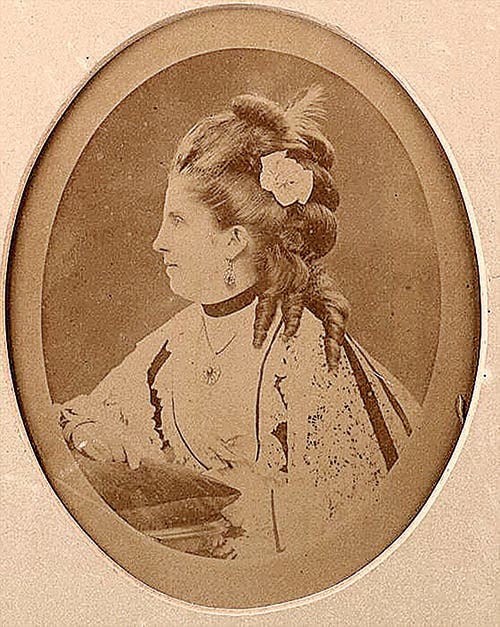
But not everyone wants to believe that Bartholdi found his Lady Liberty from home. A rumor is that the artist was inspired by a woman named Isabella Boyer, whom the two met during their respective times of fame. The French American was a well-known model and heiress, having first married Isaac Singer, the inventor of the sewing machine, and later a Luxembourg duke. Although she shares a similar facial profile to the statue, Boyer has been proven by Reuters not to be the inspiration.
Lastly, some believe Lady Liberty’s appearance was based on a Black woman. According to the National Park Service, this belief is based on a circa 1870 cast of a no longer-surviving maquette once owned by the Museum of the City of New York that portrayed a black woman as Lady Liberty, although this has been proven false. There is, however, a temporal overlap between Bartholdi’s Suez Canal and Statue of Liberty projects, during which the artist created drawings of Black Egyptian women, but there is insufficient evidence to confirm them as the source for the statue.
For more information about the Statue of Liberty and its history, visit nps.gov.
You may also like: