
CoinClinic: The Price of Cleaned Coins
What collectors should know about cleaned coins, details grades, and authenticating short snorters and their signatures.


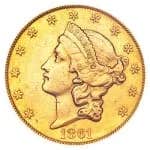
This 1927-S Saint Gaudens Double Eagle has been graded Net AU50, Tooled, Cleaned.
I see cleaned coins graded by third-party certification services graded as “genuine, cleaned” and say something such as AU Detail. Realizing that cleaning a coin reduces the value of the coin, is there a rule of thumb for how much the value is reduced?
There is no “rule of thumb” on pricing for coins that have been identified as having been cleaned, but are net-graded. The “detail” identifies the condition the coin would likely have been assigned should it not have been subjected to cleaning. Eye appeal becomes an important factor if you are considering purchasing a coin identified as having been cleaned. Does the coin still have eye appeal, or does it look like someone cleaned it with a wire brush? The re-toning color on copper coins is particularly noticeable; however, re-toned silver will never match natural toning either.
It seems that coins identified as having been cleaned could become an opportunity to fill in a blank in my collection at a lower cost for a good-looking coin. Could this make sense?
Your budget and your concern for the future resale value of such a coin must both be considered. If you are seeking an expensive rarity to complete a collection, a coin that has been cleaned may fit your budget, while a coin that has never been manipulated may be out of your reach. If you can afford a coin that has never been cleaned, that coin is more likely to have an appreciating resale value at some future date. Personally, I would recommend avoiding coins that have been cleaned if you can afford better.
Are there other reasons other than cleaning that could be the reason a coin has been net graded?
Cleaning is only one of several manipulations to which a coin may have been subjected. The coin might have been dipped, smoothed, or retooled. A coin might be identified as having been damaged. Any of these scenarios will result in a coin being assigned a net grade if it is examined by a third-party certification service. In some instances, the service may decline to encapsulate the coin, while in other instances the service may explain its opinion on the information insert accompanying the slab.
Can I get a Short Snorter certified?
Paper Money Guaranty will authenticate and grade your short snorters. PMG will also add the terms Short Snorter or Signature Annotation to the holder label if they can verify the context or the signatures. Professional Coin Grading Service will likewise authenticate and grade short snorters; however, PCGS will add Contemporary Graffiti or With Signatures to the label on the holder.
My short snorter is signed by someone of some prominence. Will PMG or PCGS authenticate the autograph on the note?
PMG offers a special “signature annotation” if the autographed signature on the short snorter isn’t the same as a person whose facsimile autograph was printed on the note. PCGS will grade the note with a “detail” designation for any graffiti or additional writing on the note. Neither service authenticates the signatures on your note as being genuine.
How can I get the autograph on my short snorter certified to be authentic?
PMG is willing to annotate the historical provenance of your note, but if there are signatures of prominent individuals on the note you want authenticated, you need to have the note examined by third-party autograph specialists. Some of the more prominent services are Beckett Authentication Service, James Spence Authentication, and PSA Collectibles Authentication and Grading Service.
E-mail inquiries only. Send to Giedroyc@Bright.net. Because of space limitations, we are unable to publish all questions.
Coin questions? The CoinClinic is open:


